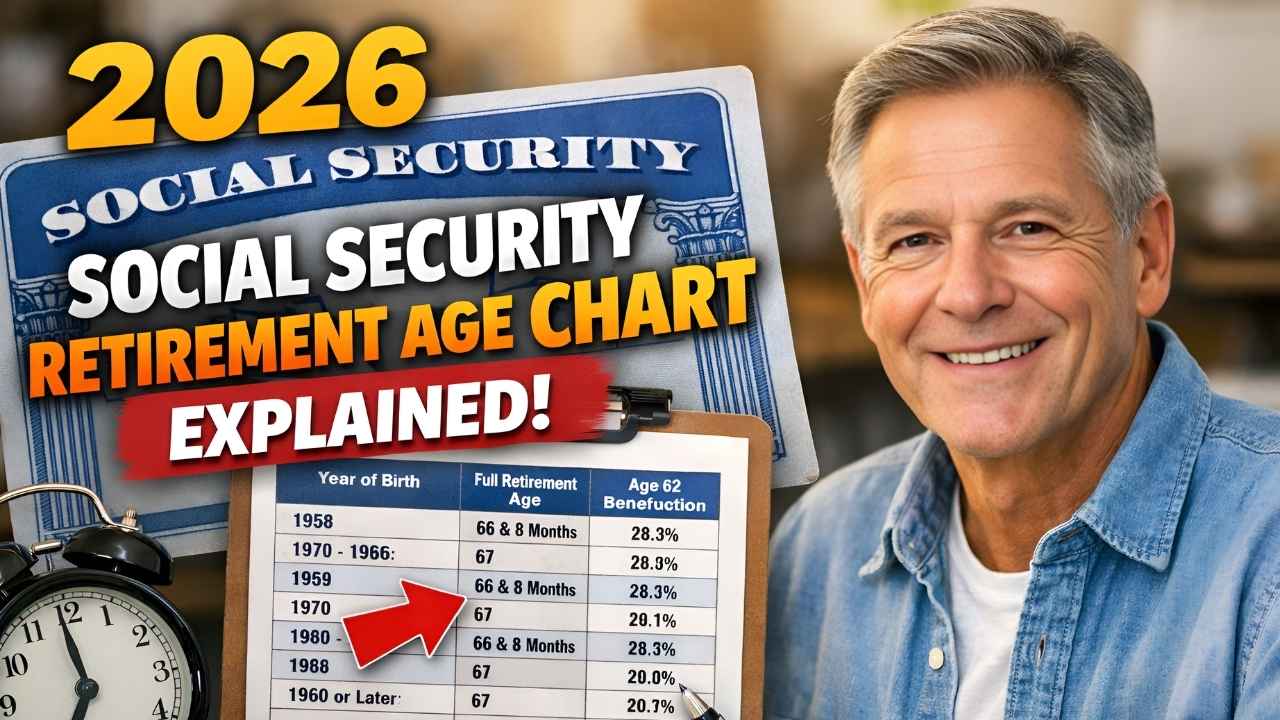
2026 Social Security Retirement Age Chart: By 2026, Social Security has reached a defining stage. The full retirement age, often called FRA, is now set at 67 for anyone born in 1960 or later. This adjustment reflects decades of gradual changes meant to align benefits with longer life expectancies. For millions of Americans approaching retirement, this means that waiting until 67 is the only way to receive the full monthly benefit amount promised by Social Security.
The FRA is the age at which you can claim your benefits without any reduction. Claiming before this age reduces your monthly payment permanently, while delaying beyond FRA increases it. Understanding this timeline is essential for making smart financial decisions about retirement.

Claiming Benefits at Age 62
Social Security allows you to begin claiming retirement benefits as early as age 62. This option provides immediate income, which can be appealing for those who need financial support sooner. However, claiming at 62 comes with a significant reduction in monthly benefits.
For someone whose FRA is 67, claiming at 62 means starting five years early. The Social Security Administration reduces benefits by a set percentage for each month claimed before FRA. In practice, this can mean a reduction of about 30 percent. If your full benefit at 67 would be $1,000 per month, claiming at 62 could lower it to around $700. That reduction is permanent and continues for the rest of your life.

The Lifetime Consequences of Claiming Early
The decision to claim early does not only affect monthly checks. It changes the total lifetime income you receive from Social Security. Consider two retirees with identical earnings histories. One claims at 62, the other waits until 67. The early claimant receives smaller checks for more years, while the later claimant receives larger checks for fewer years.
If both live into their late 80s, the one who waited until 67 will almost always come out ahead in total lifetime benefits. The difference can amount to tens of thousands of dollars. For those who delay even further to age 70, the monthly benefit can be 24 to 32 percent higher than at FRA, creating an even larger lifetime advantage.

Why the 2026 Rules Matter
The reset in 2026 is significant because it marks the end of a gradual increase in FRA that began with the 1983 amendments to Social Security. For decades, FRA was 65. Then it began creeping upward depending on birth year. By 2026, everyone born in 1960 or later faces an FRA of 67.
This means that younger generations must plan around a later full retirement age. It also means that the penalty for claiming early is steeper than it was for previous generations. Someone born in 1954 had an FRA of 66, so claiming at 62 meant a four-year reduction. For those born in 1960, claiming at 62 means a five-year reduction. That extra year makes the cut in monthly benefits more severe.

Balancing Immediate Needs and Long-Term Security
The choice of when to claim Social Security is deeply personal. Some people need the money at 62 to cover living expenses, medical bills, or debt. Others may have pensions, savings, or part-time work that allow them to wait. Longevity also plays a role. If you have reason to believe you will not live past your mid-70s, claiming early may make sense. But if you expect to live into your 80s or beyond, waiting can maximize your lifetime income.
Financial advisors often recommend thinking of Social Security as insurance against outliving your savings. The larger your monthly benefit, the more secure you are in later years when other resources may run low.

Strategies for Maximizing Benefits
There are several strategies to make the most of Social Security in 2026 and beyond. One is to coordinate with a spouse. Married couples can use claiming strategies that maximize survivor benefits or balance income needs between partners. Another is to consider part-time work after 62, which can provide income while allowing you to delay claiming Social Security.
Delaying until 70 is often the most powerful strategy for those who can afford it. Each year you wait after FRA adds about 8 percent to your monthly benefit. That increase is permanent and can make a huge difference in later years.

The Role of Health and Longevity
Health plays a central role in the decision. If you are in poor health or have a family history of shorter lifespans, claiming early may be a rational choice. On the other hand, if you are healthy and expect to live into your 80s or 90s, delaying can provide a much larger lifetime payout.
It is important to remember that Social Security is designed to provide a steady stream of income for as long as you live. The longer you live, the more valuable those larger monthly checks become.

The Psychological Side of Retirement Decisions
Beyond the numbers, there is a psychological side to claiming Social Security. Some people feel more secure knowing they have income coming in as soon as possible. Others prefer the peace of mind that comes from maximizing benefits for later years.
Retirement is not only a financial transition but also an emotional one. The decision of when to claim Social Security should reflect both your financial situation and your personal comfort with risk and uncertainty.

Looking Ahead
The 2026 Social Security retirement age chart is clear. Full retirement age is 67 for anyone born in 1960 or later. Claiming at 62 is possible, but it comes with a permanent reduction in monthly benefits. Waiting until FRA or even until 70 can significantly increase lifetime income.
The decision of when to claim Social Security is one of the most important financial choices retirees will make. It requires balancing immediate needs with long-term security. By understanding how the rules work in 2026, you can make a choice that supports both your present lifestyle and your future peace of mind.